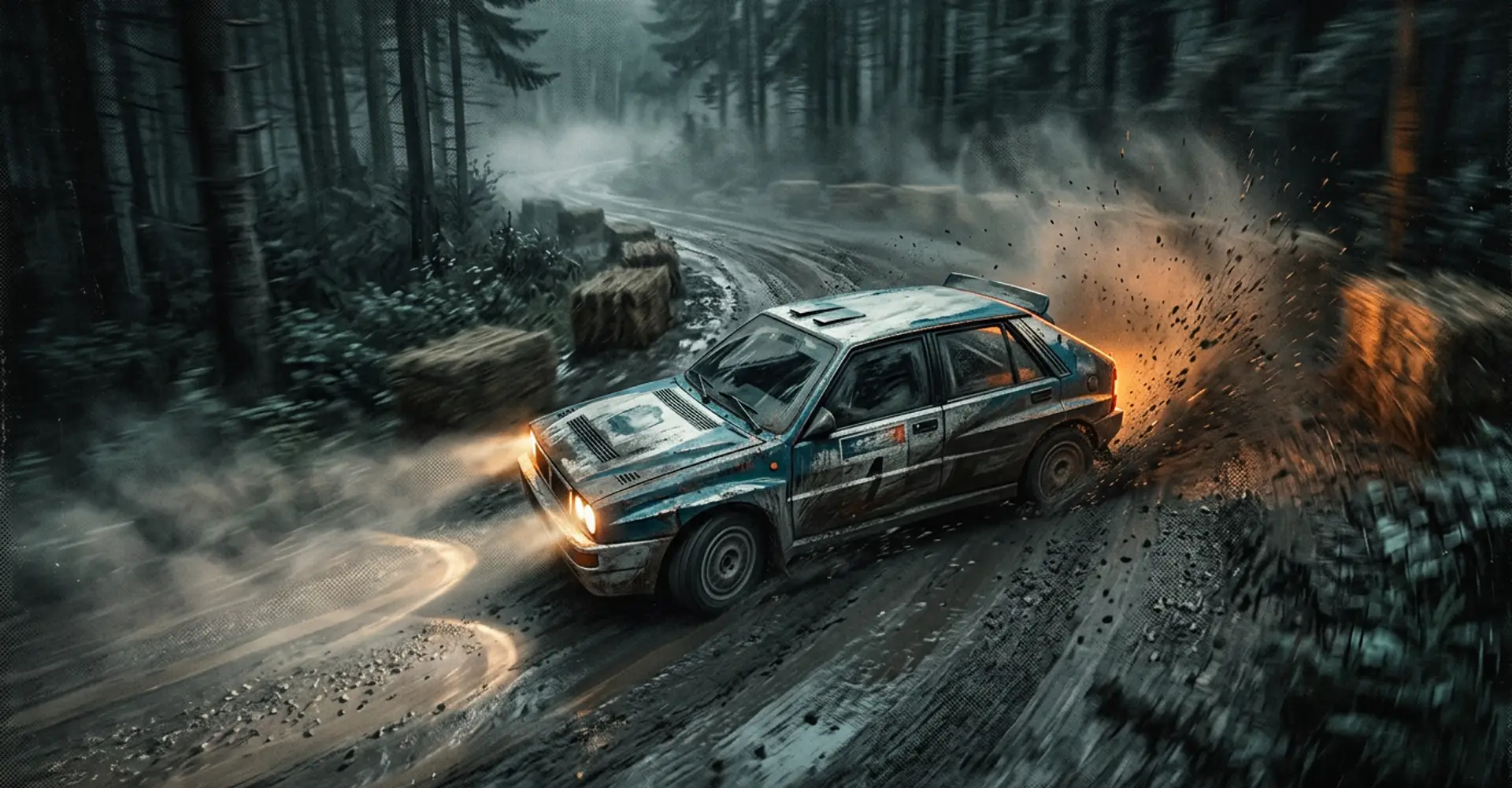
The build
Grit Rally is the answer to a complaint we kept reading in racing-game reviews: that mobile handling models flatten every car into the same understeering brick. The simulation underneath Grit Rally tracks load on each wheel, so lifting mid-corner actually rotates the car and a badly timed handbrake actually spins it.
Stages are authored as splines with surface zones — tarmac, wet gravel, mud, snow — and the co-driver calls are generated from the spline geometry, which means adding a stage does not mean re-recording audio.
The hardest engineering problem was not physics but frame pacing. The physics step runs fixed at 120 Hz and renders interpolated, which keeps handling identical on a flagship and on a four-year-old budget device.
What is in it
Load-based handling
Per-wheel weight transfer, surface grip zones, and a handbrake that can genuinely ruin a stage time.
61 stages across four surfaces
Tarmac, gravel, mud, and snow, each with a wet variant that changes grip rather than just the skybox.
Ghost replays, stored locally
Every personal best is saved as an input trace you can race against, taking up a few kilobytes each.
Locked 120 Hz physics
Fixed-step simulation with render interpolation, so a cheap device and a flagship drive the same.